

Gastronomy of Northern Portugal, Between Tripe, Stews and Tradition
Northern Portugal is a region where gastronomy tells the story of a people proud of their roots and traditions. From slow-cooked tripe to hearty stews (it might sound unusual, but it’s absolutely delicious !), each dish invites you to explore a rich and warm culture. Prepare for a culinary journey through Minho, Douro and Trás-os-Montes !
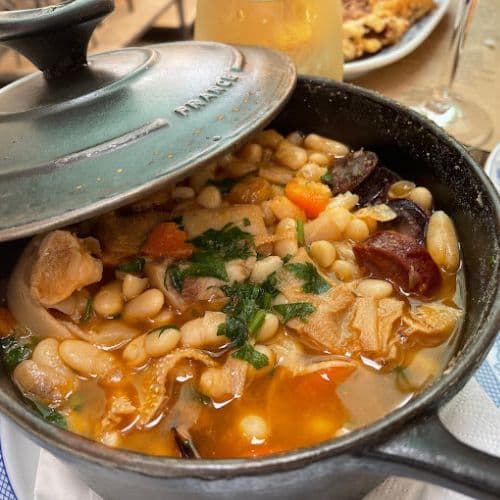
Tripas à Moda do Porto, A Dish with a Story
No discussion of Northern Portuguese cuisine would be complete without the famous Tripas à Moda do Porto! This emblematic dish hails from Porto, a city with culinary treasures beyond the “francesinha”. Legend has it that in the 15th century, Prince Henry the Navigator requested the people of Porto to supply meat for expeditions to Ceuta. With only the tripe left, the locals offered it; and ever since, this dish has become a symbol of the city.
The tripe is slowly cooked with white beans, vegetables, chorizo, smoked sausage (salpicão) and sometimes veal’s foot. It is traditionally served with white rice. A comforting meal, perfect for chilly days.
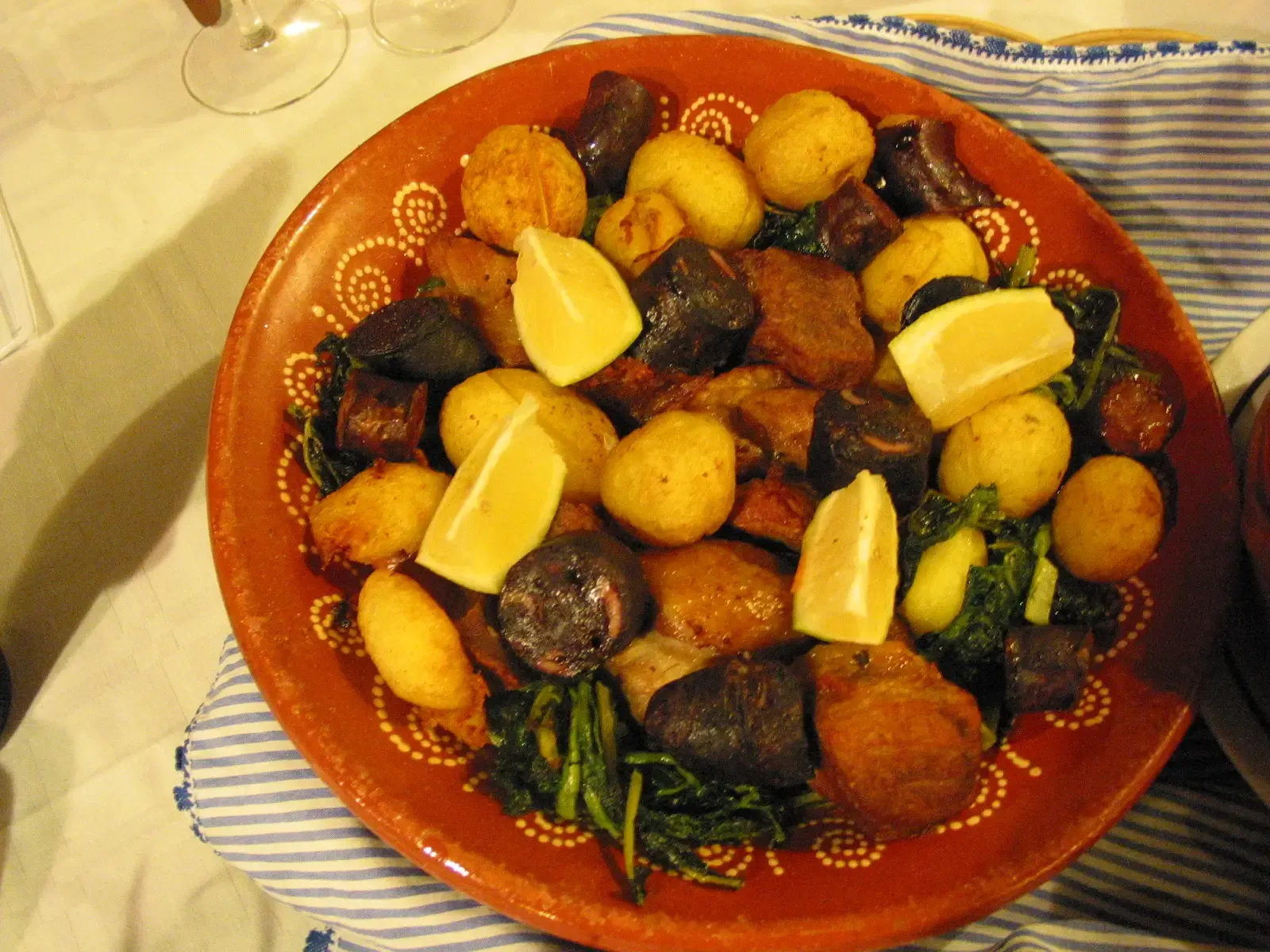
Rojões à Moda do Minho, A Pork Feast
Another Northern classic is Rojões à Moda do Minho, made from marinated chunks of pork in white wine, garlic, bay leaves and paprika, then fried to perfection. Often served with tripa enfarinhada, a local specialty of flour-coated fried pork tripe.
This dish is popular during festivals and celebrations, reflecting the region’s hospitality and convivial spirit. One plate is more than enough to leave you fully satisfied !
Cabidela, A Taste of the Past

Cabidela is a curious dish made of rice cooked with chicken or duck and blood, giving it a distinctive dark colour and unique flavour. Though its origins are ancient, it remains cherished in rural areas of Minho and Trás-os-Montes. For the authentic experience, it’s best sampled in restaurants specialising in Cabidela, or even better, at a local home!
©visitbraga
Caldo Verde, Simplicity and Warmth
Caldo Verde is a thick soup made from potatoes, finely sliced Portuguese cabbage, olive oil and garlic, a true delight ! Traditionally, slices of chorizo are added. Originating in Minho, it is a staple at family meals and popular festivals, widely appreciated for its comforting qualities.
Beloura, Traditional Bread
Beloura is a traditional Minho bread made from a mix of wheat, corn and rye flours, often baked with pork blood, broth, pepper and spices. It’s usually fried and served alongside meat dishes like Rojões, a real treat!
Queijo da Serra, Exceptional Cheese
Queijo da Serra is a soft, creamy cheese made from sheep’s milk, primarily in Trás-os-Montes. Known for its rich flavour, it pairs wonderfully with rustic bread and a glass of Douro wine, creating the perfect tasting experience.
Douro Wines, The Perfect Accompaniment
Red Douro wine is the ideal companion to these hearty dishes. Produced in the Douro Valley, these wines reflect the region’s terroir and centuries of winemaking expertise, offering both quality and diversity.
Tips for the Gourmet Traveller
Where to eat ?
For an authentic experience, visit tascas (traditional small restaurants) or adegas (wine cellars) in Minho and Douro, offering home-cooked meals in a convivial atmosphere.
When to visit
September to November is perfect, coinciding with the grape harvest and regional festivals.
Don’t miss !
join a São Martinho celebration in November, featuring chestnuts, traditional dishes, music and folk dancing.
Northern Portugal’s gastronomy is a journey through time and taste ! Each dish tells a story, and every ingredient carries meaning. Whether you’re an epicure seeking new flavours or a fan of traditional cuisine, the North will delight your taste buds and enrich your culinary adventure.
Share this article
Suggested articles
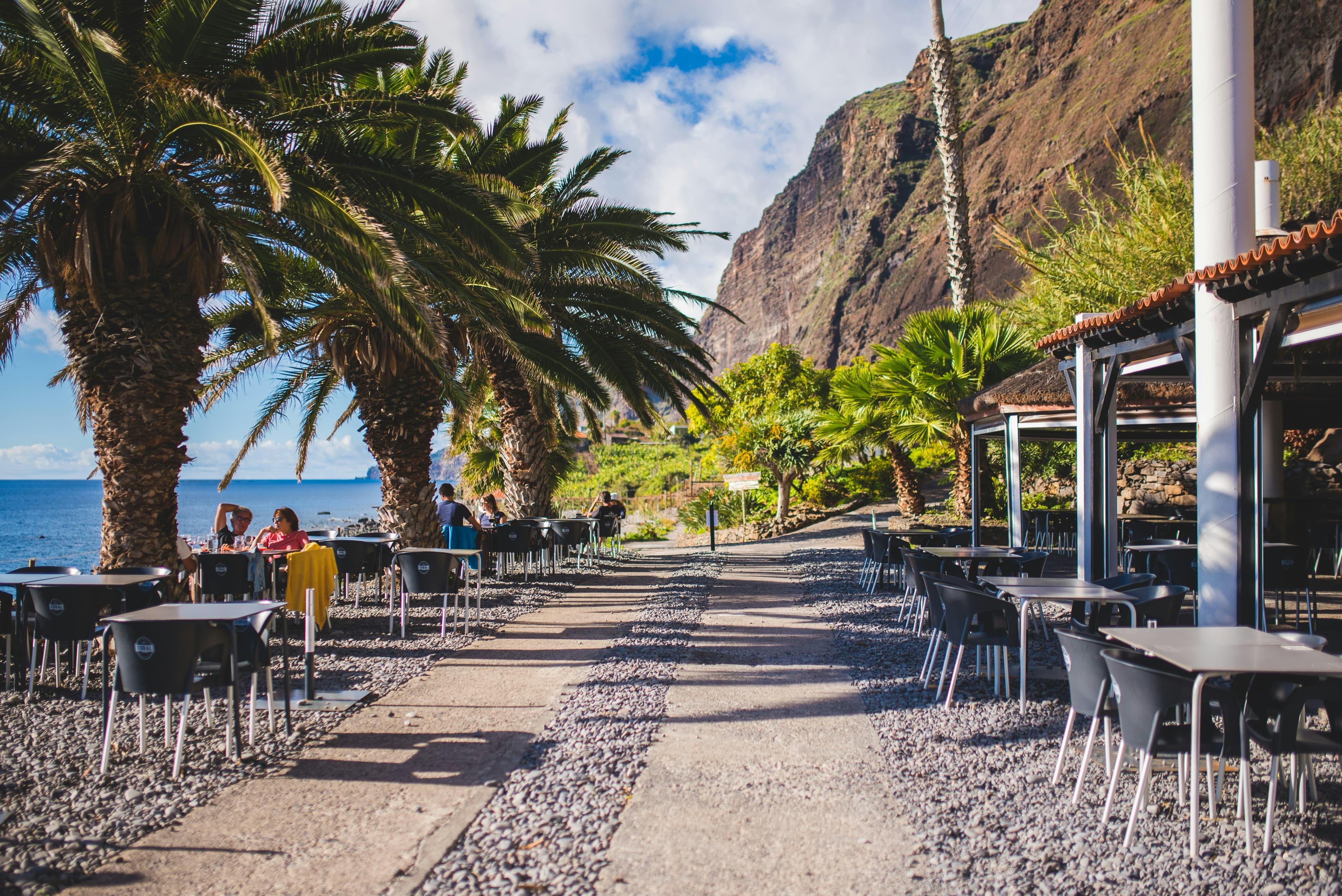
Madeira: island cuisine and espetadas
The archipelago of Madeira, located off the Portuguese coast, is much more than just a paradise for hikers or nature lovers: its cuisine reflects its history, its geography and its island spirit. Among the emblematic dishes, the Espetada stands out for its rustic simplicity, its generosity and its ability to gather people around the fire. In this article, we explore the island cuisine of Madeira in general, and then take a deep dive into the espetada: its origin, preparation, side dishes and why it is a must-try during a stay on Madeira.
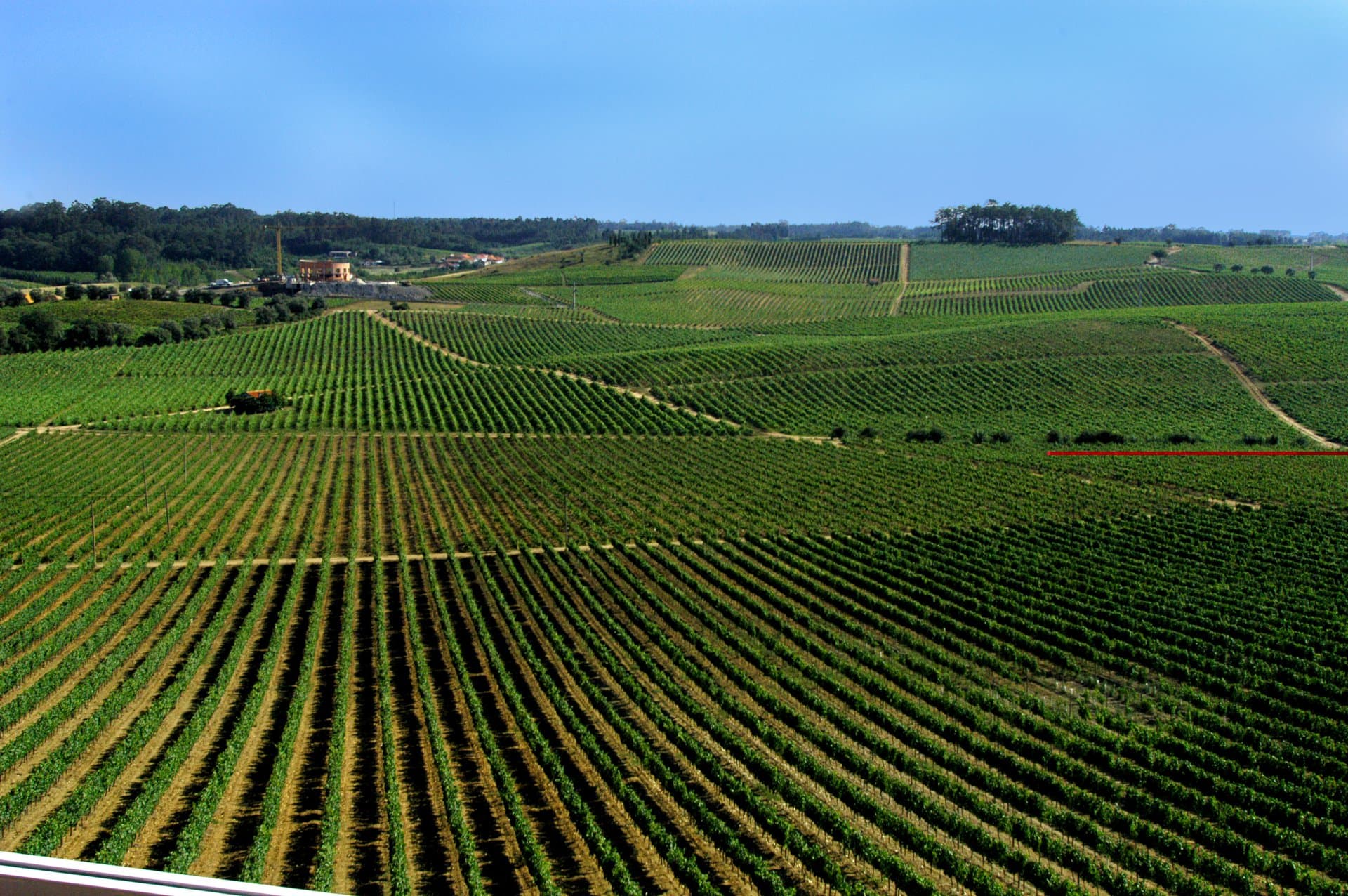
Bairrada, Land of Suckling Pig and Sparkling Wine
In the heart of central Portugal, between the valleys of the Mondego and Vouga rivers, lies the region of Bairrada, a land where vineyards meet pig farms, where the slow heat of wood-fired ovens blends with the effervescence of sparkling wine. Here, every meal is a ritual and every sip a celebration. If you’re looking for an authentic Portugal, far from seaside clichés, let yourself be charmed by Bairrada, a land of indulgence, warmth, and tradition.
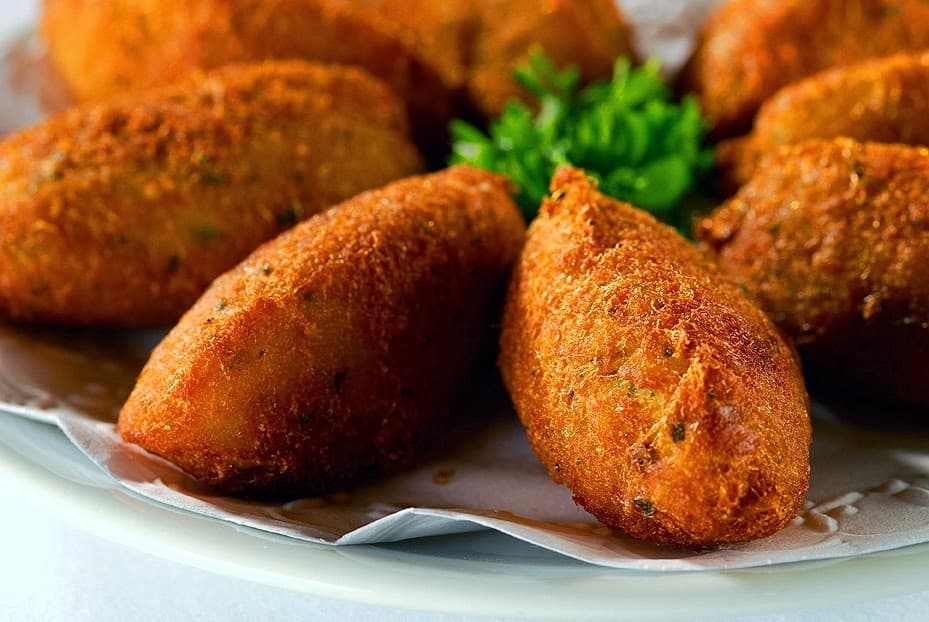
Pastéis de Bacalhau
There are dishes that smell like holidays and grandma’s kitchen. Pastéis de bacalhau are exactly that. These little golden cod croquettes, crispy on the outside and soft on the inside, are at once an appetiser, a madeleine of Proust, and proof that Portugal has completely mastered the art of frying.
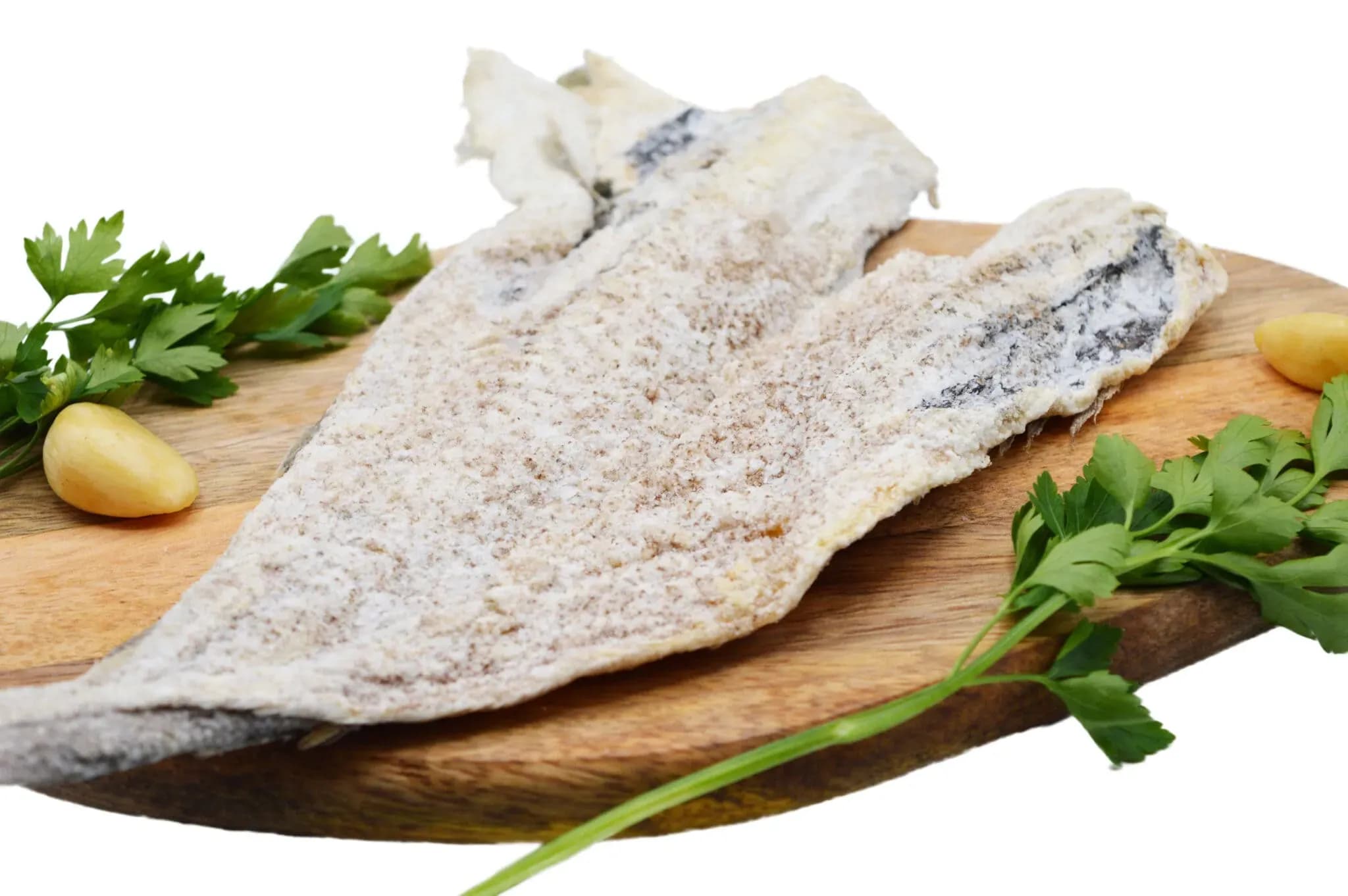
Why Do the Portuguese Love Cod So Much if It Doesn’t Live in Their Waters?
It is one of Portugal’s greatest culinary paradoxes: a country proud of having one of the largest maritime zones in Europe, with kilometers of Atlantic coastline and ancient fishing traditions, has made its national fish one that doesn’t even swim in its waters. Cod is absent from the Portuguese sea, yet omnipresent in the nation’s culture, gastronomy, and collective imagination.
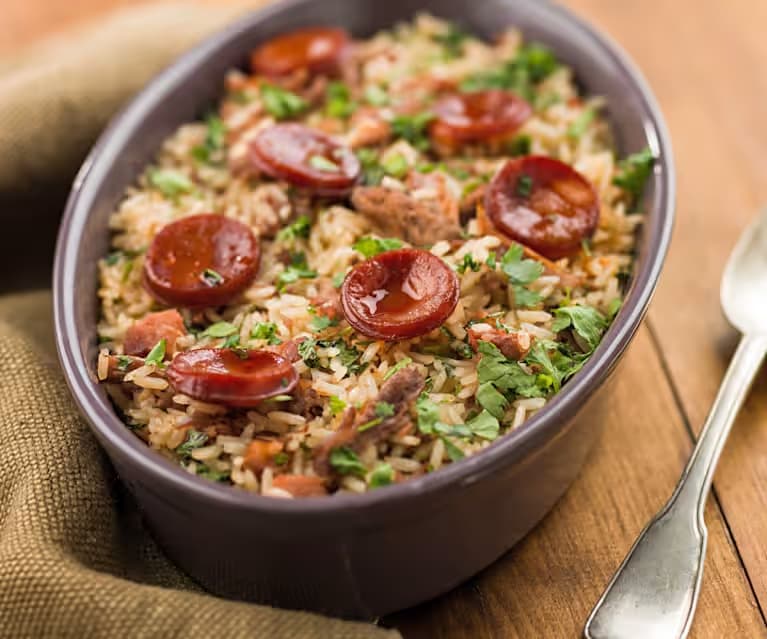
The secret of arroz de pato (duck rice)
Ah, arroz de pato… Just thinking about it makes me hungry ! This dish is the very definition of Portuguese comfort food, the kind that fills the house with rich aromas, warms the heart, and makes you forget bad weather (and sometimes even family arguments, yes really !).
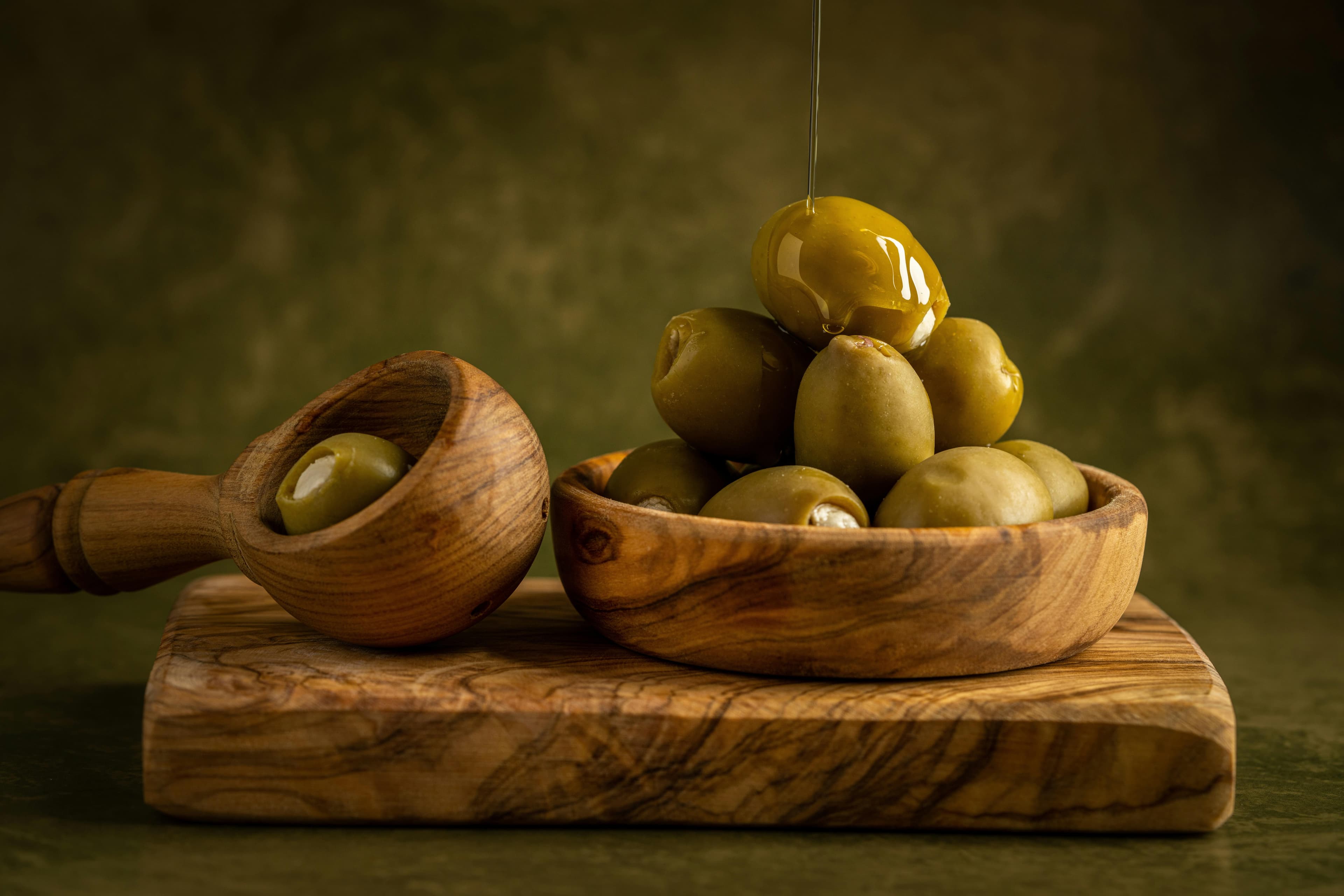
Portuguese Olive Oils, a Green Gold to Discover
Olive oil is much more than just an ingredient in Portugal; it embodies a millennia-old tradition, ancestral know-how, and a true source of national pride ! Nicknamed “liquid gold,” Portuguese olive oil is renowned for its exceptional quality and its central role in the country’s gastronomy. Since Antiquity, olive oil has been at the heart of Portuguese culture and cuisine. Today, it is even internationally recognised for its outstanding quality and unique flavours.