

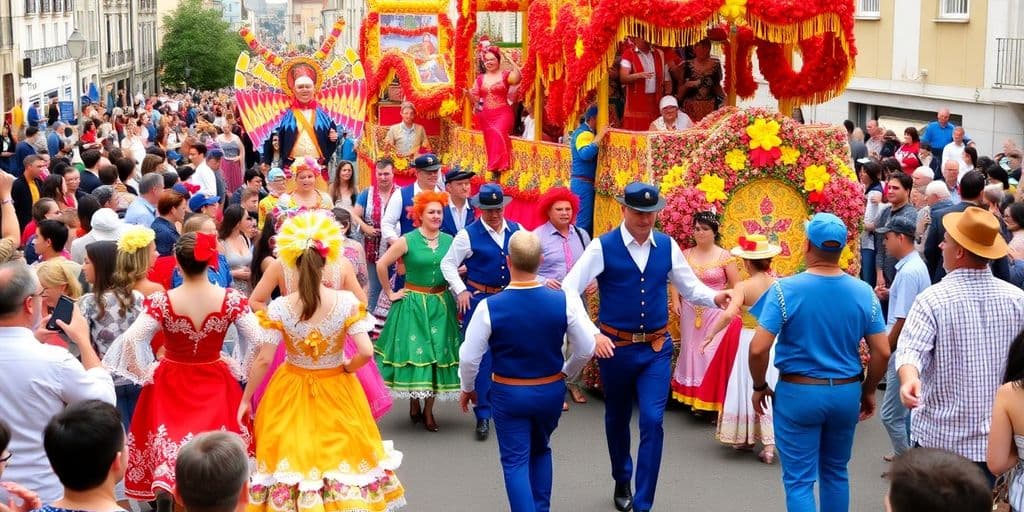
The Portuguese Carnivals, from Torres Vedras to Ovar
February in Portugal isn’t just the month of gentle rain and steaming coffee. It’s above all the time when the whole country dresses up, puts on makeup, dances, sings and laughs until losing its voice… Because here, Carnival isn’t just a parade! It’s an institution, a collective outburst of joy, a cheerful, well-organised chaos.
And if there are two places that embody this gentle Portuguese madness, they’re Torres Vedras and Ovar. Two towns, two styles, but the same desire : to celebrate without restraint, as if tomorrow didn’t exist ! (or at least, as if we could postpone being serious to another day).
Torres Vedras, the “most Portuguese of carnivals”
Torres Vedras, a small town north of Lisbon, transforms every year into the national capital of joyful mayhem. It’s known, quite literally, as “o Carnaval mais português de Portugal” (yes, that’s really its nickname : the most Portuguese of carnivals) and for good reason. Here, there are no ultra-technological floats or glittering costumes à la Rio de Janeiro! No. Here, satire, creativity and, above all… ingenuity take centre stage.
It all begins weeks before the celebration : residents, schools, associations, everyone joins in. Costumes are often homemade, materials recycled, and creativity runs wild. The result? Colourful, crazy, wonderfully inventive parades. You’ll come across papier-mâché politicians, unlikely couples, low-cost superheroes, giant cows and, of course, the famous Matrafonas (men dressed as women, with loud wigs and wobbly heels), the unmistakable icons of the local carnival !
The spirit of the Torres carnival is a blend of mockery and affection. People laugh at everything, especially at those in power, at clichés, at the country’s flaws… but always with a smile! It’s Portuguese catharsis at its best : you dress up to say out loud what everyone thinks quietly, and no one takes offence, that’s actually the point.
And then there’s that atmosphere… impossible to describe unless you’ve lived it. Brass bands in the streets, confetti in your hair, music echoing through the night. Even the shyest souls end up dancing. (Speaking from experience : it’s hard to resist when a Matrafona grabs your hand to make you waltz through the crowd, quite a memorable moment when I think back on it…)
A carnival of satire and improvisation
What makes Torres Vedras stand out is its political and social edge. For nearly a century, this carnival has acted as a sharp mirror of Portuguese society. The satirical floats parody the figures of the moment : politicians, TV stars, influencers… no one is spared, and that’s exactly what people love about it!
But don’t worry, it’s all good-natured ! Portuguese humour may be cheeky, but it’s never mean-spirited. And if you’re a foreigner, be ready : they’ll make room for you in the parade without hesitation. No need to speak Portuguese ; just smile and raise your glass of ginjinha (or beer, depending on the neighbourhood and your mood).
The nights of the Torres carnival are a mix between a street fair and an open-air nightclub. Squares turn into dance floors, cafés into impromptu stages, and laughter becomes the universal language. By 3 a.m., you’re not entirely sure if you’re dancing or floating but who cares, it’s Carnival, after all.
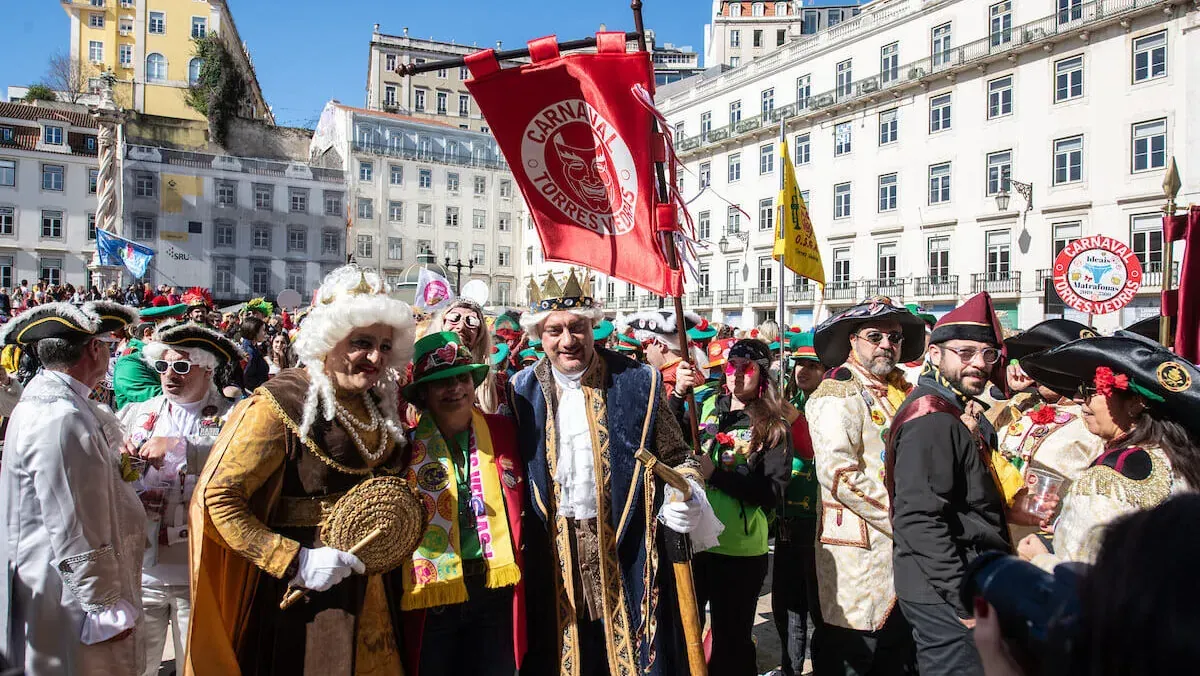

Ovar, the other beating heart of the Portuguese carnival
More than 200 kilometres to the north, another town is getting ready to lose its head too: Ovar, near Aveiro. If Torres is satire, Ovar is spectacle ! Here, Carnival takes on the air of a giant cabaret, a musical, and a folk festival all rolled into one.
It’s the oldest carnival in Portugal, with roots going back to the 19th century. And it’s managed to evolve without ever losing its soul. Every year, thousands of visitors flock here to admire the grand parades, where costume design and choreography reach… let’s say, impressive levels (you have to see it to understand!).
The local samba schools (yes, Portugal has those too) compete in creativity. Sequins, feathers, dazzling smiles and perfectly timed dance moves, it’s almost like Rio, except the dancers sometimes wear scarves, and hot wine replaces caipirinhas (well, the temperatures aren’t quite the same, so you adapt!).
But Ovar is also a deeply community-driven celebration. The groups (grupos carnavalescos) prepare their costumes and music months in advance. Every neighbourhood, every group of friends wants to outdo last year. The result? An explosion of colours, rhythms and good vibes that fills the entire town for several days (good luck if you’re a light sleeper and rented a place in town !).
Two carnivals, two faces of Portugal
What’s fascinating is how these two carnivals each tell the story of Portugal in their own way.
Torres Vedras, with its satire and homemade costumes, embodies the popular spirit, irony, lightness, resilience in the face of hardship. Ovar, with its flair for spectacle and beauty, symbolises the other side of Portuguese culture : emotion, pride and community spirit.
And at their core, they share one essential thing : the need to celebrate life, no matter what. Portugal may be a discreet country, but when Carnival arrives, it bursts with joy. It’s a way to exorcise daily life, to laugh at oneself, and most of all, to come together (yes, the Portuguese really know how to party !).
A little survival guide to enjoying Carnival to the fullest
A few friendly tips (tried and tested) if you decide to dive into the experience !
No, don’t come dressed “normally”. If you show up in jeans and white trainers, you’ll stand out immediately. And besides, it’s part of the fun (trust me, it’s much better this way). Put on a mask, a wig, a cape… whatever you like, it’s a rite of passage.
Be ready to dance. In both Torres and Ovar, the music never stops ! And it’s impossible (really impossible, I can confirm) to resist it.
Forget your schedule… Carnival is spontaneous! Planning to be home by midnight? You’ll be home by 4 a.m. and happy about it.
Try everything. Street stalls sell it all: bifanas, churros, caldo verde, ginjinha, red wine (and of course, the famous and delicious pão de ló from Ovar !)… This isn’t the time to count calories (and honestly, you’ll dance them off anyway…)
Come early, leave late. The real Carnival happens in the streets, from morning till dawn.
And one last piece of advice: don’t take anything too seriously… In Portugal, Carnival is about laughing at everything, including yourself. That’s the secret to its magic !
Other carnivals not to be missed
If Torres Vedras and Ovar are the stars, other towns are also worth the detour :
- Loulé, in the Algarve, offers a sunny, samba-filled carnival with giant floats and dazzling costumes.
- Podence, in the north, presents a much older and more mysterious version, with its Caretos (masked figures with loud cowbells), heirs to ancient pagan rituals. A raw, wild, fascinating carnival.
- And in Sesimbra, Carnival takes on a maritime air, with seaside parades and a unique charm.
Every region has its version, its folklore, its energy. And that’s what makes Portugal so endearing : this ability to blend tradition with celebration, religion with humour, nostalgia with pure joy.
When celebration becomes a philosophy
Watching these carnivals, you understand something essential about Portugal: here, celebration isn’t a luxury, it’s a necessity. In a country where people have long learned to make do with little, celebrating becomes an act of resistance. Laughing, dancing, dressing up, it’s also a way of saying, “we’re alive, and we’re staying that way.”
And maybe that’s the true genius of the Portuguese carnival: behind the masks lies a truth, that of a people who’d rather laugh at their troubles than drown in them. A gentle joy, sometimes tinged with melancholy, but always sincere.
So, if one February day you hear drums, shouts and laughter spilling out of a Portuguese street, follow the sound (you won’t be disappointed !). You’ll likely stumble upon an unlikely parade, feathers flying, Matrafonas dancing, and a festive spirit that won’t let you go.
And there, glass in hand, confetti in your hair, you’ll understand why, in Portugal, Carnival isn’t just a tradition. It’s a state of mind…
Share this article
Suggested articles
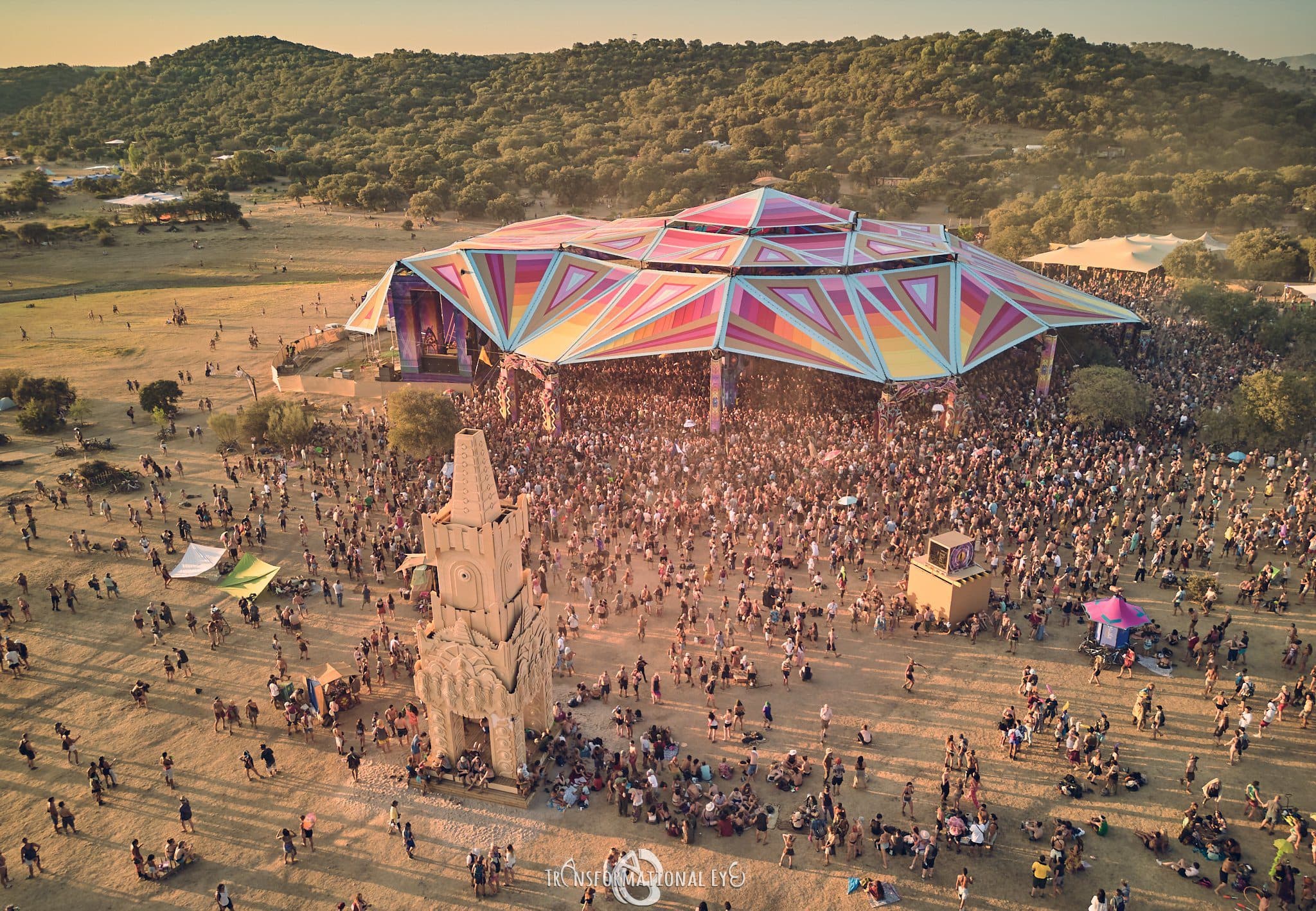
Boom Festival : Trance, Ecology & Good Vibes in the Heart of Portugal
Picture this : it’s summer, you’re by a Portuguese lake, hair blowing in the breeze, feet bare in the grass (yes, go on, get comfy!). Around you, thousands of people from all over the world have gathered to dance to the rhythm of psy-trance but also (and above all) to celebrate a shared commitment : living the festival spirit while respecting the planet. Welcome to Boom Festival !
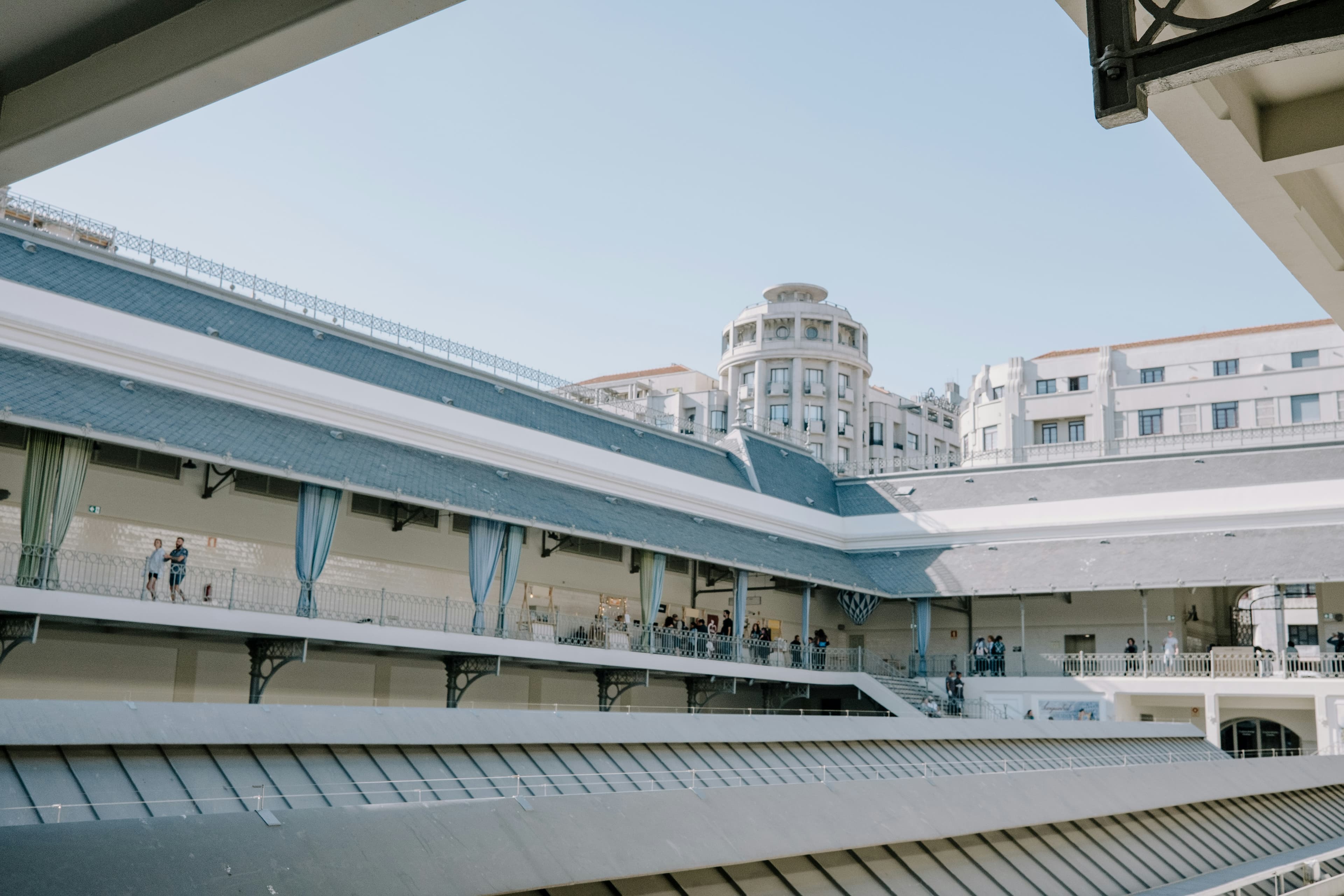
Bolhão Market, The Heart of Porto’s Popular Life
In the heart of Porto’s historic centre, the iconic “Mercado do Bolhão” stands as one of the city’s living symbols. Opened in 1914, it has recently undergone renovation to preserve its authenticity while adapting to contemporary needs.
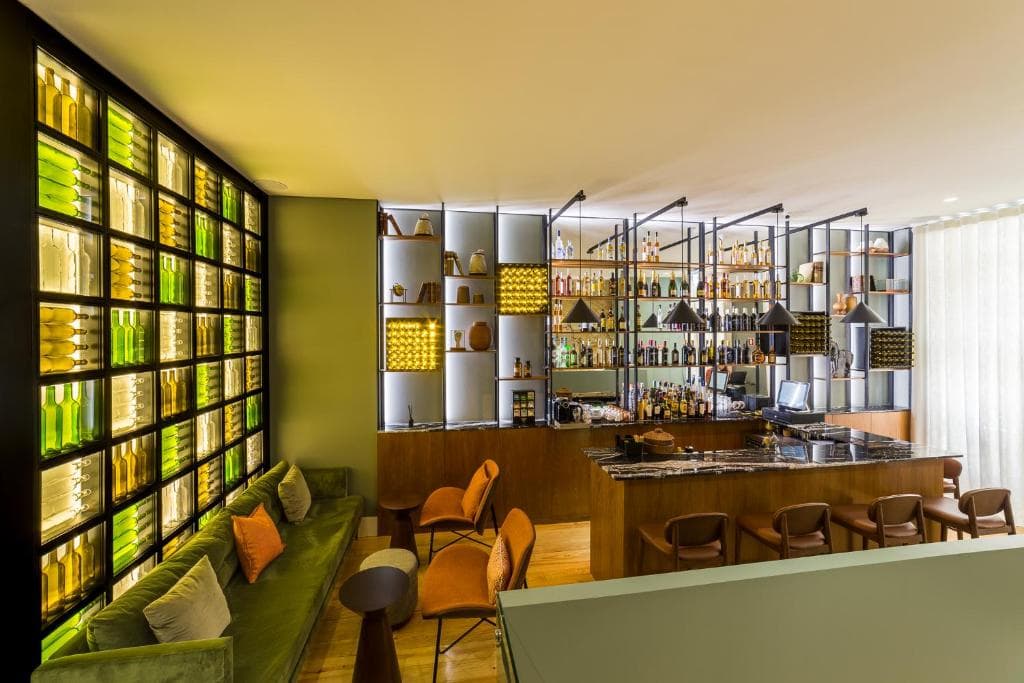
Cultural Fusion: When a Hotel Becomes an Art Gallery or Experimental Space
There is in Portugal a creative energy that never ceases to surprise — a rare ability to merge the old and the contemporary, tradition and modernity, without ever losing authenticity. In a country where culture has always been a lived experience rather than a concept, hotels are now becoming far more than places to stay: they are galleries, studios, and at times, living laboratories where art and life intertwine.
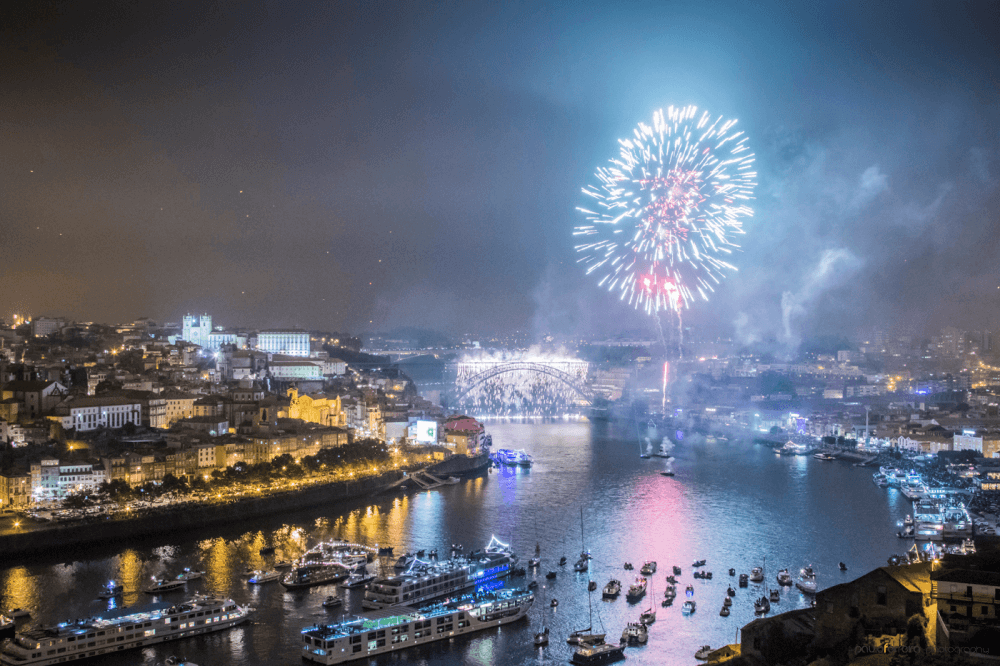
The Feast of São João in Porto, between lanterns, sardines, and plastic hammers
Porto, on the evening of June 24… The air smells of grilled sardines, colorful garlands dance in the wind, and a strange noise echoes through the narrow streets: clack, clack, clack. No, it’s not a nighttime construction site, but thousands of plastic hammers joyfully tapping consenting heads. Welcome to the Feast of São João, one of the most anticipated events of the year in Portugal and without a doubt, the happiest chaos you’ll ever experience !
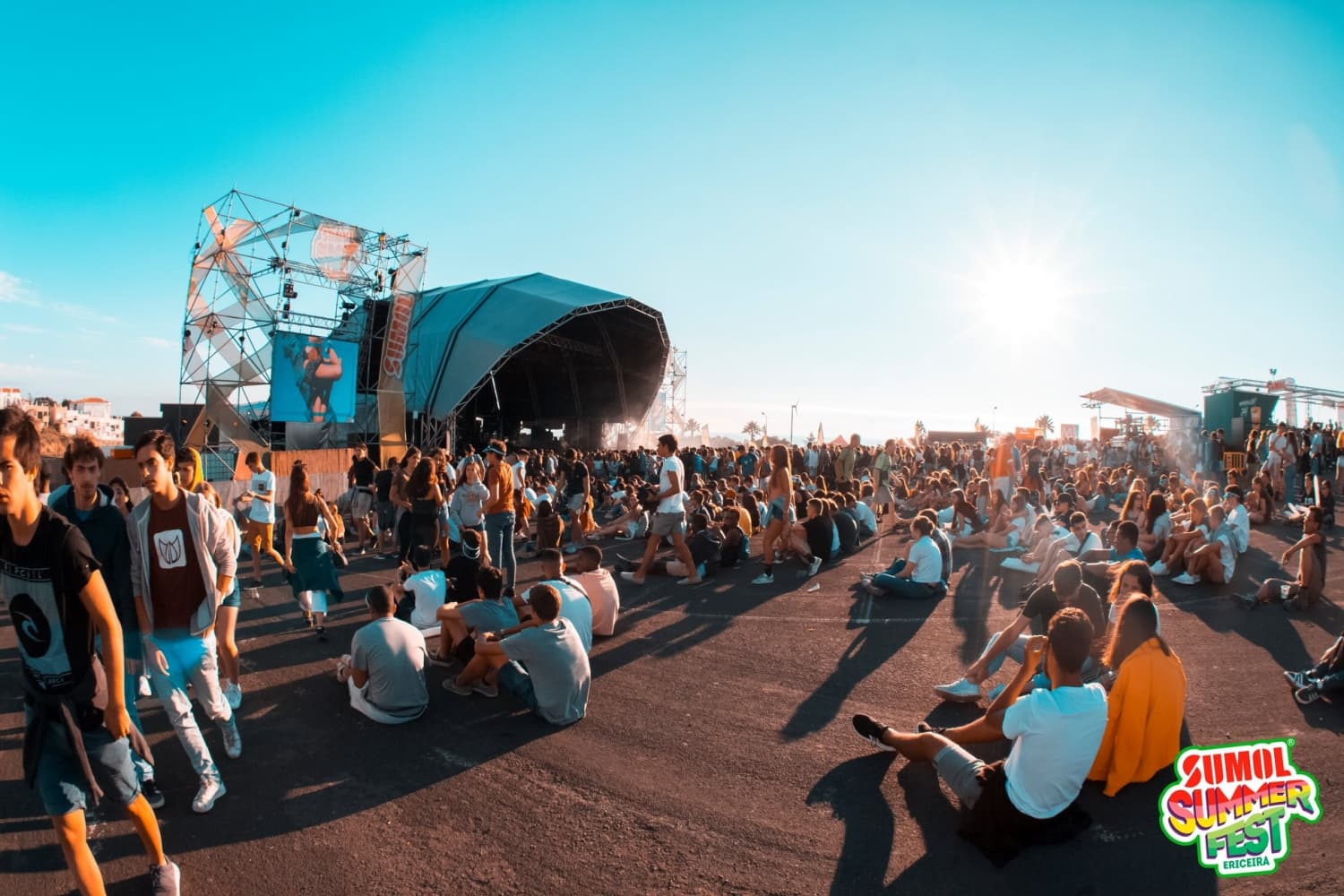
The biggest music festivals in Portugal
Have you ever felt that rush of adrenaline when the sun starts to set and the first notes echo through a packed crowd ? That’s exactly the spirit of a Portuguese festival. With my comfy sneakers, notebook, and phone in hand, I’m taking you on a tour of Portugal’s must-see summer music events ! And yes, I’ve been there, I’ve danced, I’ve taken photos (and yes, my feet hurt a little, but it was worth it).
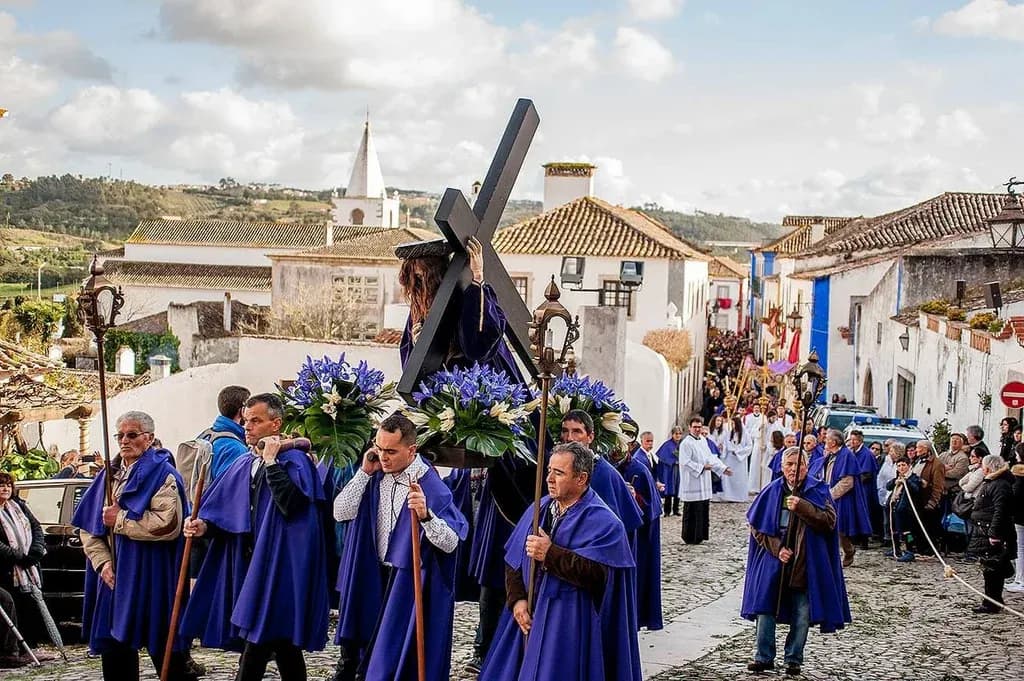
Religious processions, a Portugal between fervour and folklore
In Portugal, faith does not hide. It is sung, sometimes danced, adorned with flowers and light. It even flows down into the streets, to the sound of bells and drums, carried by entire generations. Whether you are a believer, a simple onlooker or a lover of shared emotions, attending a religious procession in Portugal means diving into one of the most profound and authentic aspects of Portuguese culture! Between fervour, tradition and popular spectacle, these parades reveal the soul of a country where spirituality often rhymes with conviviality.