

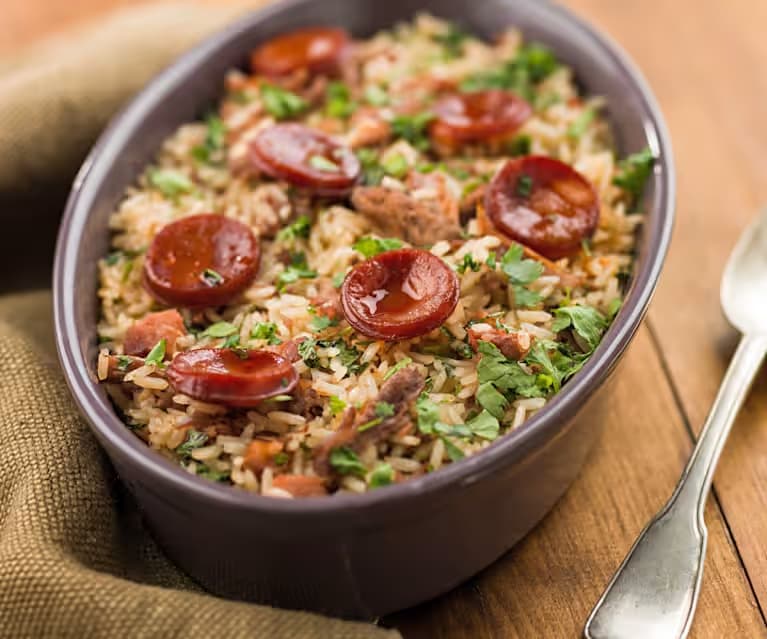
Ah, arroz de pato… Just thinking about it makes me hungry ! This dish is the very definition of Portuguese comfort food, the kind that fills the house with rich aromas, warms the heart, and makes you forget bad weather (and sometimes even family arguments, yes really !).
If you live in Portugal, it’s impossible to avoid : it’s on every menu, from little village taverns to city restaurants. And if you’ve had the pleasure of tasting it, you know, you never forget a good duck rice.
A people’s dish turned icon
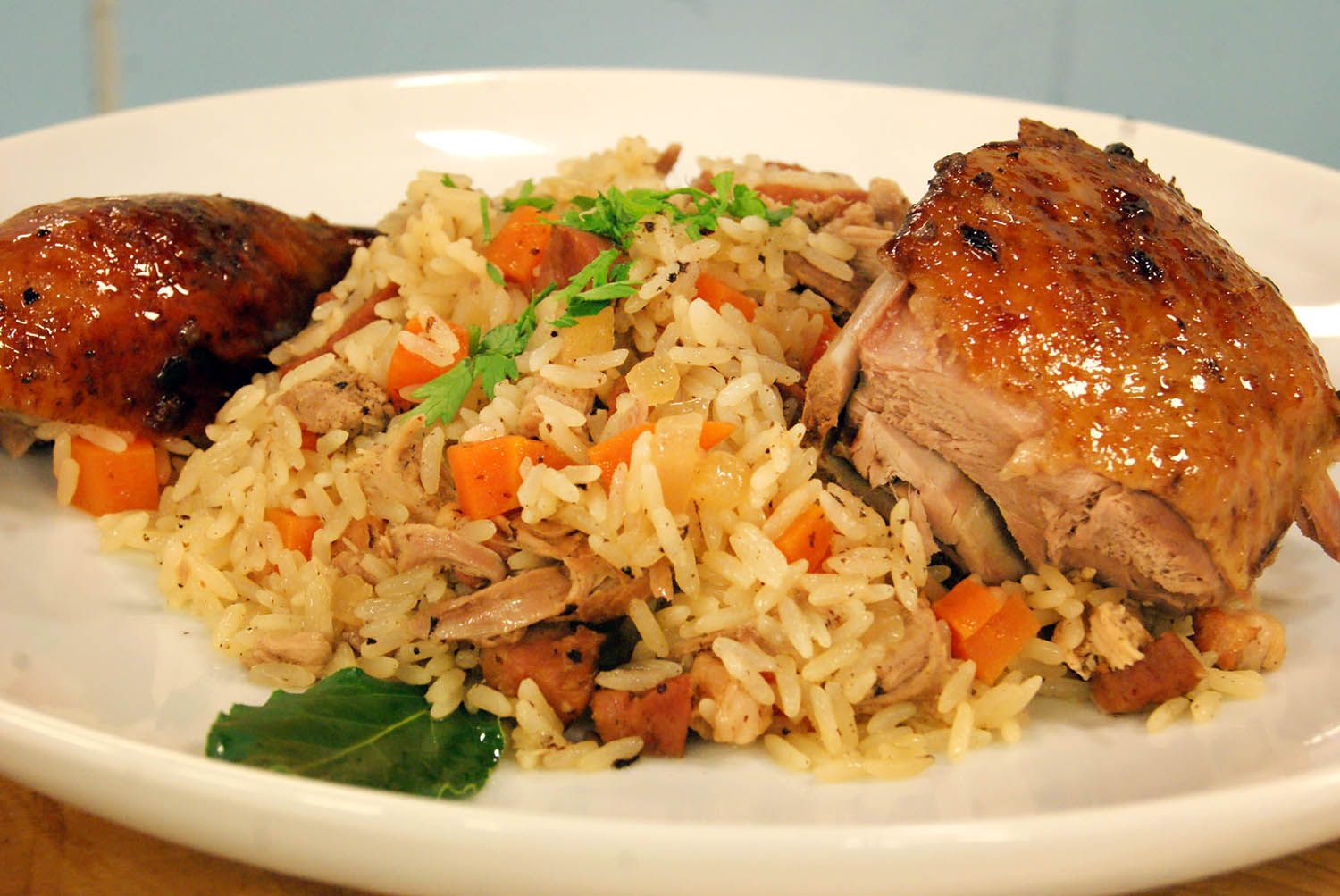
Arroz de pato is a bit of a national darling in Portuguese cuisine. Born in the countryside, back when people cooked with whatever they had on hand : rice, a bit of duck, a few vegetables, and a touch of chouriço ! Over time, it climbed its way up to become a staple of Sunday family lunches.
Even today, it’s the dish of family gatherings, celebrations, and reunions. A symbol of sharing, simple but generous, like everything Portugal does best.
The concept ? A two-step recipe (and a little patience)
Arroz de pato is a dish you earn. You can’t just throw everything into a pot and hope it “cooks itself”. No, here, the secret is time. You simmer, brown, and gratin. You put on some music (a good fado playlist, or maybe some rancho folk tunes, of course) and let yourself be carried away. Because yes, this dish is made in two big stages : first, cooking the duck to get tender, juicy, fragrant meat ; then, cooking the rice in the duck broth, so it absorbs all those deep flavours.
Everything then goes into the oven, topped with slices of chouriço (and sometimes a little butter for the more indulgent, I admit, I love that part). The result ? A golden crust, soft, melt-in-your-mouth rice, and that irresistible Sunday-lunch aroma filling the air !
The ingredients (for 4 to 6 people)
Get your aprons ready, your taste buds alert, and above all, bring your appetite (definitely not the meal to cook if you had a francesinha for lunch !)
- 1 whole duck (or 4 legs if you prefer something simpler)
- 2 onions
- 2 carrots
- 2 cloves of garlic
- 1 bay leaf
- 400 g of rice (preferably Portuguese medium-grain rice)
- 150 g of sliced chouriço
- 1 small glass of white wine
- Olive oil, salt, pepper
- (Optional : a pinch of paprika for a little extra kick)
Step 1 : the broth of happiness
In a large pot, place the duck, carrots, onions, bay leaf, and a bit of salt and pepper. Cover with water and let it simmer gently for about an hour and a half, until the meat comes away easily.
Tip : don’t throw away the broth ! That’s the secret of the flavour. Strain it and keep it safe, it’s the liquid gold your rice will cook in.

Once the duck is done, shred the meat, removing the skin and bones. (At this point, the temptation to “taste a little piece” is inevitable. Go ahead, it’s tradition.)
Step 2 : the rice, the quiet hero
In a pan, sauté the garlic and onion in a little olive oil. Add the rice, stir well, then pour in twice its volume of hot broth.
The secret is to add a small glass of white wine too, it gives that subtle, slightly fruity note that changes everything.
Cook over medium heat until the rice has absorbed almost all the liquid. It should stay a little firm, as it will finish cooking in the oven.
Step 3 : the gratin moment
Preheat your oven to 180 °C.
In an ovenproof dish, spread a first layer of rice, then all the shredded duck, and finally a second layer of rice on top.
Smooth the surface with a spoon, then arrange the chouriço slices nicely in a pattern. (This is the “Instagrammable” moment of the recipe, don’t rush it !)
Bake for around 20 minutes, until the top turns golden and slightly crispy.
Out of the oven…
Close your eyes and take a deep breath.
That mix of rice, chouriço and tender duck, it’s Portugal on a plate. Serve piping hot, straight from the dish, with a green salad or a glass of red wine from the Alentejo.
And then you’ll understand why people often say that “duck rice is the recipe of patience and reward.”
Little variations (because everyone has their secret)
Every family has its own version.
Some add a bit of bacon for extra flavour, others replace the white wine with a splash of dry port.
There are also those who fry the rice directly in duck fat (yes, it’s rich; but oh, so delicious…).
And then there are the purists, who swear by the traditional version, “just like grandma used to make it.” And honestly ? They’re right.
What we love about this dish
Arroz de pato is a dish that tells a story : the story of taking time to do things well. It’s an ode to slowness, conviviality and generosity. A dish cooked as much with the hands as with the heart. And above all, it’s a dish that’s never eaten alone. Because a good duck rice is like a good memory : it’s meant to be shared.
So, what’s the secret of duck rice ?
It’s simple : time, love, and a hearty appetite. Oh, and a little friendly advice, always make a bit extra, because it’s even better the next day !
Bom apetite !
Share this article
Suggested articles

Pastéis de Nata: History and Secrets of the Recipe
It’s hard to imagine a stay in Portugal without tasting a warm pastel de nata, with its crisp flaky crust and delicately caramelized custard. These small tarts, known as pastéis de Belém when they come from the famous Lisbon pastry shop, have become one of the country’s greatest gastronomic symbols. Their popularity has long surpassed Portugal’s borders: today, you can find them in Paris, London, New York, or Tokyo — but their true authenticity lies in the Lisbon tradition, passed down for more than two centuries.
Gastronomy of Northern Portugal, Between Tripe, Stews and Tradition
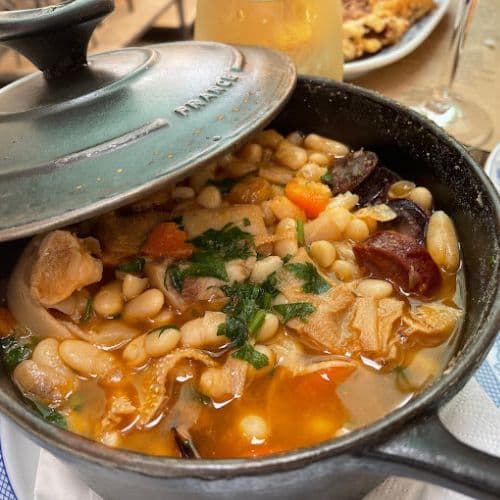
Northern Portugal is a region where gastronomy tells the story of a people proud of their roots and traditions. From slow-cooked tripe to hearty stews (it might sound unusual, but it’s absolutely delicious !), each dish invites you to explore a rich and warm culture. Prepare for a culinary journey through Minho, Douro and Trás-os-Montes !
Pastéis de Bacalhau
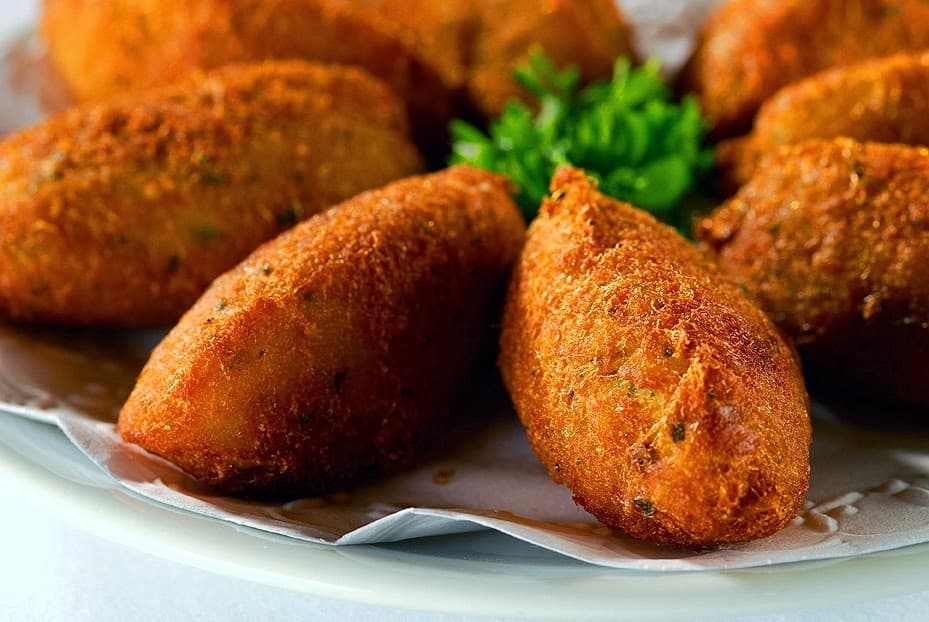
There are dishes that smell like holidays and grandma’s kitchen. Pastéis de bacalhau are exactly that. These little golden cod croquettes, crispy on the outside and soft on the inside, are at once an appetiser, a madeleine of Proust, and proof that Portugal has completely mastered the art of frying.
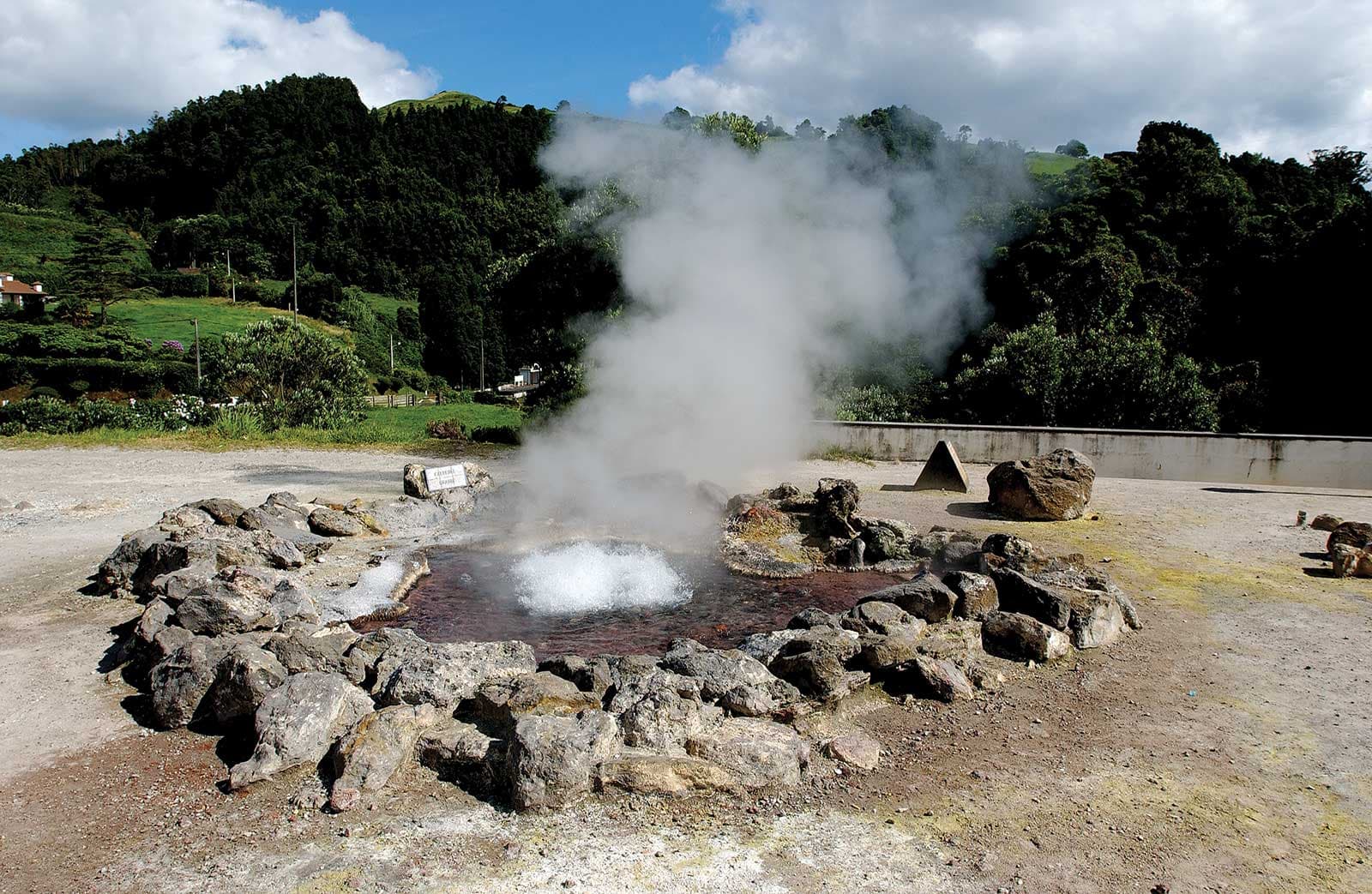
Azores, volcanoes and hot-earth cuisine
The Azores archipelago, in the middle of the Atlantic, is not only a spectacular backdrop of crater lakes, lava fields and geysers: it’s also a culinary world where the warm volcanic earth and the nearby ocean meet on the plate. Here, dishes have depth, generosity and authenticity. Let’s dive into this land-and-fire cuisine with some must-try specialties and the spirit behind them.
Bacalhau, Portugal’s King of Fish, 1001 Ways to Cook It
In Portugal, there are certain topics one avoids: the rain, taxes, politics… and above all, saying you don’t like bacalhau! Yes, it’s almost sacrilegious, because here, cod isn’t just a fish : it’s an institution, a national symbol, a true culinary religion. And everyone knows it (it’s part of the cliché): the Portuguese are famous for loving to cook and eat bacalhau…
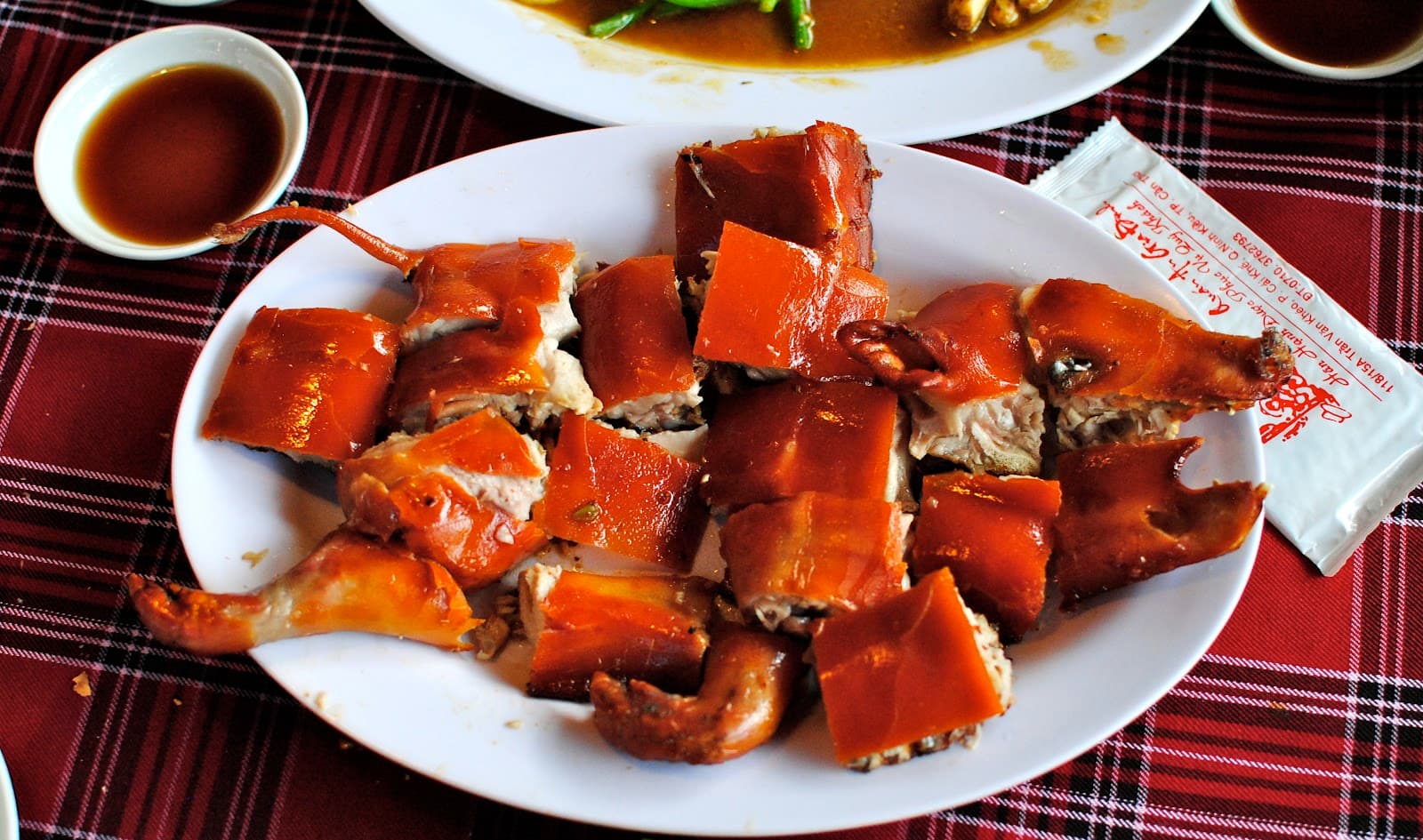
Leitão da Bairrada, roast suckling pig, pride of a region
In the center of Portugal, more precisely between Coimbra and Aveiro, there’s an area where people speak seriously about three things : sparkling wine, bread… and roast suckling pig ! Welcome to the Bairrada region, where leitão assado (literally “roast suckling pig”) isn’t just a Sunday dish.